PI
Intellectual property
Description: The objective of this course is to understand and apply the key legal principles governing the creation, protection and exploitation of innovations and creative works.
Learning outcomes: The aim of this course is to equip future engineers with the essential legal knowledge required to thrive in an environment where innovation and intellectual property play a central role. By the end of the course, students will be able to:
- master the fundamentals of intellectual and industrial property law (copyright, trade marks, designs, patents, know-how);
- understand the challenges of intellectual property in the age of digital technologies and artificial intelligence;
- identify the legal risks associated with the exploitation or protection of an innovation, and propose appropriate solutions (protection strategies, verification of third-party rights, conflict management);
- analyse real-life cases based on actual situations encountered, to ground theoretical knowledge in a practical and operational approach;
- take into account the international dimension of intellectual property, in particular through the tools and databases of the major offices (INPI, EUIPO, EPO, WIPO).
Evaluation methods: Written Exam (1h30, proctored) - Case Study
Course supervisor: Stéphanie Guglielmina
Geode ID: SPM-HEP-018
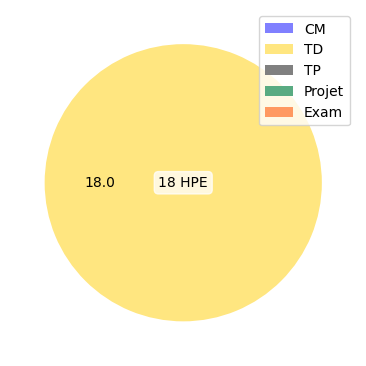
CM:
- Propriété intellectuelle (3.0 h)
- Brevets (3.0 h)
TD:
- TD1 : Propriété intellectuelle (1.5 h)
- TD2 : Brevets (1.5 h)